Why Technology Is the Only Path to a Fair, Efficient, Waste‑Free North American Food System

By Dave Gajadhar, Resultant Group
Consumers across North America are asking the same blunt question in every grocery aisle: Why does food cost so much, and why isn’t anyone fixing it? This isn’t inflation. It’s the consequence of a system designed to protect institutions — not consumers, not producers, and certainly not innovation.
The Core Problem
We are paying premium prices for a system that throws food away. As your document states:
“Supply controls became price controls; price controls became innovation controls.”
Farmers aren’t getting richer. Consumers aren’t getting relief. The system is.
Scarcity‑era rules are colliding with abundance‑era markets — and the result is expensive waste.
The Consumer Pressure Cooker
Food prices continue rising across milk, eggs, chicken, produce, and staples, while farmer incomes stagnate. This is not a market failure — it is a structural failure.
Everyone feels squeezed except the system itself.
What Marketing Boards Actually Do
Marketing boards determine:
- Who can produce
- How much they can produce
- Where it can be sold
- What price moves through the chain
As your document puts it:
“That’s not market stewardship. That’s choreography — and choreography always costs more than a free dance.”
Built for paper ledgers, not real‑time data, these systems now function as bottlenecks rather than stabilizers.
The Waste Problem Nobody Wants to Own
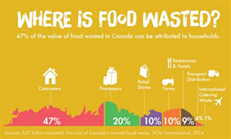
Canada discards millions of tonnes of edible food every year. Rigid quotas, slow adaptation, and price‑first rules make spoilage inevitable.
Consumers subsidize this waste with every grocery bill.
The Producer Reality
Producers buy quotas, follow rules, and sell into markets they do not control. Protection has become a cage — one built long before the internet, AI, or modern logistics.
The North American Mismatch
Canada operates rigid supply management. The U.S. operates flexible, market‑responsive systems.
One continent. Two incompatible models. Consumers notice. Retailers notice. Producers notice. The mismatch costs everyone.
The Technology Shift
Technology can now perform every core function of a marketing board — faster, cheaper, and without waste:
- Real‑time demand forecasting
- AI‑driven logistics
- Transparent pricing
- Cross‑border data integration
- Direct‑to‑consumer channels
- Automated compliance
Gatekeeping is being replaced by responsiveness.
The Executive Imperative
Executives now face a simple choice: Lead the modernization — or be disrupted by it.
Transparent pricing, real‑time matching, waste‑free logistics, and producer‑led innovation are coming with or without institutional permission.
What Technology Does Better Than Marketing Boards
Replace Quotas with Real‑Time Supply–Demand Platforms
Technology stabilizes supply instantly and transparently.
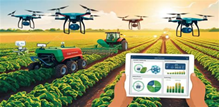
- AI forecasts consumption weeks or months ahead
- Digital marketplaces match producers and buyers in real time
- Smart contracts automate pricing, delivery, and payment
- Dynamic production signals guide farmers to scale up or down
Outcome: Lower prices, fewer shortages, fewer surpluses.
Replace Price‑Setting Committees with Transparent Market Algorithms
Price setting behind closed doors is obsolete.
- Blockchain reveals every transaction from farm to shelf
- Algorithmic pricing reflects real costs, not political negotiations
- Open dashboards give producers and consumers the same information
Outcome: Fair, predictable pricing.
Replace Distribution Controls with Smart Logistics Networks
Technology opens the entire continent.
- IoT sensors track freshness and spoilage risk
- AI routing reduces transport time and cost
- Cross‑border platforms integrate U.S.–Canada–Mexico flows
- Automated compliance eliminates paperwork bottlenecks
Outcome: Fresher food, lower cost, fewer shortages.
Replace Waste‑Inducing Quotas with Predictive Production Models
Overproduction becomes preventable.
- Predictive analytics forecast yield, weather, disease, and demand
- Automated crop planning adjusts production before waste occurs
- Surplus exchanges redirect excess to processors, food banks, or export markets
Outcome: Less waste, lower prices.
Replace Centralized Governance with Distributed, Data‑Driven Oversight
Power shifts from institutions to transparent systems.
- Distributed ledgers track safety and quality
- Automated audits replace manual inspections
- Shared governance platforms connect producers, retailers, and regulators
Outcome: Trust through transparency.
What Technology Does Better Than Marketing Boards
| Board Function | Technology Replacement | Outcome | |||
| Quotas | Real‑time demand platforms | No shortages or surpluses | |||
| Price setting | Transparent algorithms | Fair, stable prices | |||
| Distribution control | Smart logistics | Fresher, cheaper food | |||
| Waste management | Predictive analytics | Waste drops dramatically | |||
| Governance | Distributed data systems | Full transparency | |||
| Regulation | Reg-Tech automation | Faster, safer compliance | |||
| Producer control | Digital empowerment | Higher margins | |||
| Cross‑border coordination | Integrated platforms | Continental stability | |||
Replace Slow Policy Cycles with Adaptive, Real‑Time Regulation
Annual rule updates are incompatible with modern markets.
- Reg‑Tech engines adjust standards automatically
- Scenario modeling tests policy impacts before implementation
- Digital compliance tools eliminate paperwork
Outcome: Safer food, faster innovation.
Replace Gatekeeping with Producer Empowerment Platforms
Producers regain control.
- Direct‑to‑consumer channels bypass intermediaries
- Digital co‑ops pool resources without bureaucracy
- Smart financing rewards efficiency and sustainability
Outcome: More choice, better quality, lower cost.
Replace Fragmented Systems with Integrated Continental Platforms
Technology unifies North America’s food ecosystem.
- Harmonized data standards
- Integrated logistics
- Shared forecasting models
Outcome: Stable prices across borders.
The Hard Truth
Marketing boards were built for a world of:
- Scarcity
- Slow communication
- Limited data
- Regional markets
Technology operates in a world of:
- Abundance
- Instant information
- Predictive intelligence
- Continental integration
Boards manage risk. Technology eliminates it.
Boards stabilize prices. Technology reveals them.
Boards protect the system. Technology empowers the people in it.
The Future of Food
As your document states:
“The future of food is connected, not controlled. The future of food is responsive, not regulated into paralysis.”
A future that empowers producers and protects consumers is not optional — it is overdue.
The Call to Leadership
Executives: stop defending a system that defends itself.
Invest in platforms, analytics, and logistics that make waste visible and prices honest.
Lead the modernization — or be outpaced, outpriced, and outflanked by markets already moving toward fairness, speed, and transparency.
The choice is leadership or obsolescence.